USD Time Deposit vs Bitfinex USD Lending: Key Differences
Contents
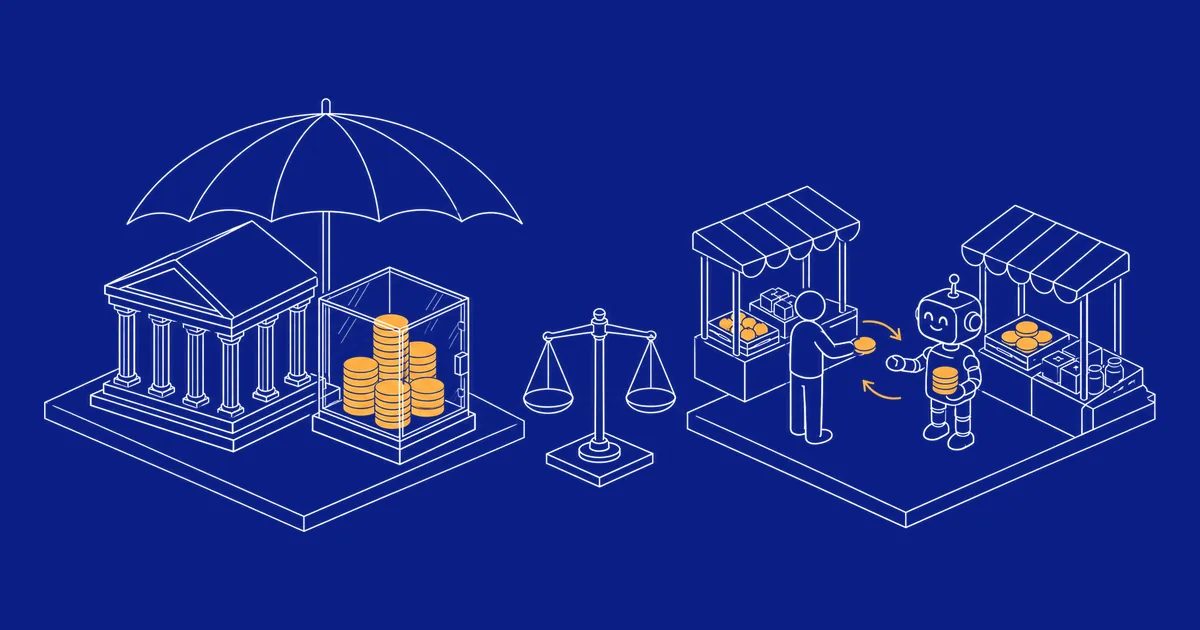
A USD time deposit at a Taiwanese bank and USD lending on Bitfinex both pay interest on dollars. They differ in who borrows your money, how the rate is set, and who stands behind it when something goes wrong. This article compares how they work and what can go wrong. It isn't investment or tax advice. Posted rates and rules were checked on October 1, 2026.
A USD time deposit
You place dollars with a bank in Taiwan for an agreed term and rate, and get principal plus interest back at maturity.
Bank of Taiwan, for example, offers USD time deposits from 7 days to 1 year, with a 1,000 USD minimum. Its posted rates on October 1, 2026 were 2% to 2.05% a year for 1-month to 1-year terms and 0.9% for 7 to 21 days. E.SUN Bank's posted rates the same day were 2% to 2.1% for 1 month to 1 year. Banks also run promotional rates. Go by what the bank publishes.
You can break the deposit early, at the cost of some interest. Bank of Taiwan, First Bank and CTBC all say interest is paid at 80% of the posted rate for the time actually held, and nothing if you held it for less than a month.
Deposit insurance covers foreign-currency deposits. Each depositor is covered up to NT$3 million per bank, principal and interest, NTD and foreign currency combined, and paid out in NTD. Deposits at a bank's offshore banking unit (OBU) aren't covered.
The tax rules are clear too.
- Bank deposit interest is interest income and goes into your consolidated income.
- Each filing household gets a special deduction of NT$270,000 a year for savings and investment income.
- Interest is withheld at 10%, but not when the tax on a single payment is NT$2,000 or less, which means a single interest payment of up to NT$20,000 isn't withheld.
- A single interest payment of NT$20,000 or more is charged the 2.11% National Health Insurance supplementary premium.
USD lending on Bitfinex
You hold dollars in your Bitfinex funding wallet and place offers to lend them to borrowers on the platform, mostly margin traders.
The rate is set by offers and bids on the funding book. There is no posted rate. Loans run from 2 to 120 days. Once an offer fills, the lender can't call it back, though the borrower can repay early. Bitfinex takes 15% of the interest as a fee.
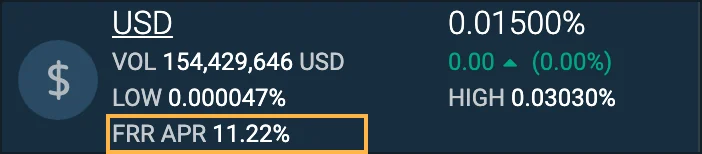 The USD ticker on the Bitfinex funding page, captured October 1, 2026. Rates are per day, and the boxed line is FRR as an APR
Rates swing widely. From October 2025 to September 2026, the traded rate on 2-day USD loans, annualized, had monthly medians between 4.0% and 7.0%, or 3.4% to 6.0% after the fee. Over the same period the daily close ranged from 0.3% to 16.2%. These are traded rates and don't count time an offer sat unfilled.
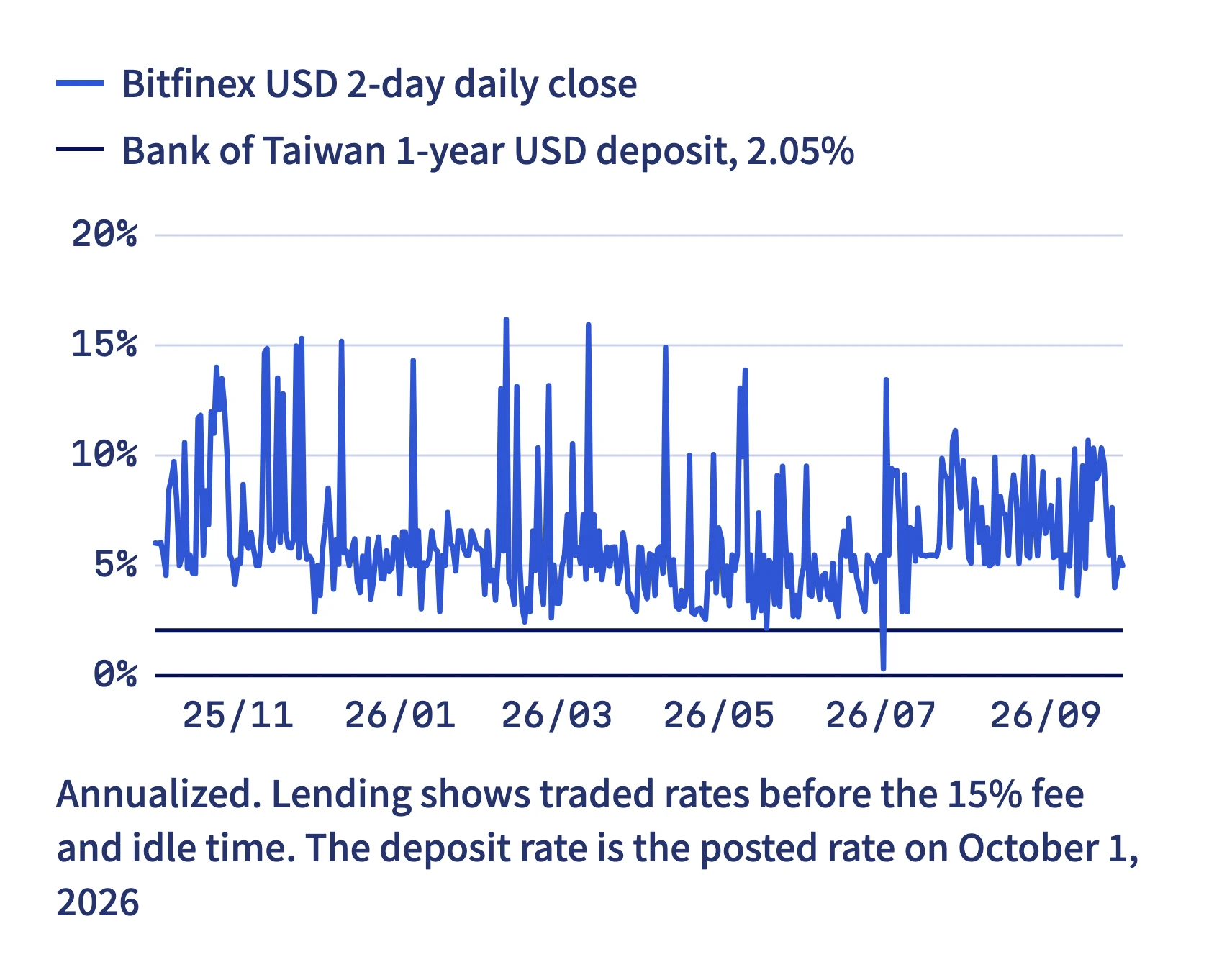 The Bitfinex daily close for 2-day USD loans against Bank of Taiwan's posted USD deposit rate, October 2025 to September 2026. Lending rates come from Bitfinex public funding candles
Where they differ
| USD time deposit | Bitfinex USD lending | |
|---|---|---|
| Who borrows | The bank | Margin traders |
| Rate | Known on day one | Each loan fills at the market rate of the moment |
| If things go wrong | Deposit insurance up to NT$3 million | No government protection or insurance |
| Getting out early | Break it and get 80% of the posted rate | Wait for expiry or repayment |
| Tax | The rules are on the books | No official category yet |
| Work involved | None after you deposit | You place offers and re-offer money when it returns |
Who borrows your money
A deposit is a loan to the bank, which lends it on. Bitfinex lending is a loan to traders, with Bitfinex doing the matching and the forced liquidations.
Whether the rate is certain
With a deposit you know on day one what you'll get at maturity. Each Bitfinex loan fills at the market rate of that moment, and nobody can promise what it will be next month.
When something goes wrong
A deposit has deposit insurance, up to NT$3 million.
Bitfinex's terms of service say fiat and tokens on the platform aren't protected or insured by any government, and that assets in your account aren't held separately in your name. The terms also say Bitfinex doesn't guarantee lenders against losses. More in Is Bitfinex lending safe?
Getting your money back early
You can break a deposit and lose part of the interest. A filled loan can only wait for expiry or for the borrower to repay.
How it's taxed
The rules for deposit interest are all on the books, as above. Taiwan hasn't said which category of income Bitfinex lending interest falls into. See Bitfinex lending interest and Taiwan tax.
How much work it takes
A deposit needs no attention. Lending means setting your own rate and period and re-offering money when it's repaid, or it sits idle. A lending bot can do that part.
Dollars or USDT?
A time deposit holds dollars on the bank's books. Buying them costs a spread: during business hours on October 1, 2026, Bank of Taiwan's spot buy and sell rates for USD were NT$0.1 apart.
On Bitfinex you can lend USD or USDT. The common way to fund an account from Taiwan is to buy USDT and send it over, in which case you're lending USDT.
USDT is a token issued by Tether. Tether's terms say it is backed by reserves but isn't fiat itself, isn't legal tender, and isn't backed by any government or insured. To redeem dollars directly from Tether you have to be a verified customer, redeem at least 100,000 USD at a time, and pay a fee of 0.1% or 1,000 USD, whichever is greater. Everyone else gets back to dollars by selling on an exchange, where the price can be above or below 1 USD.
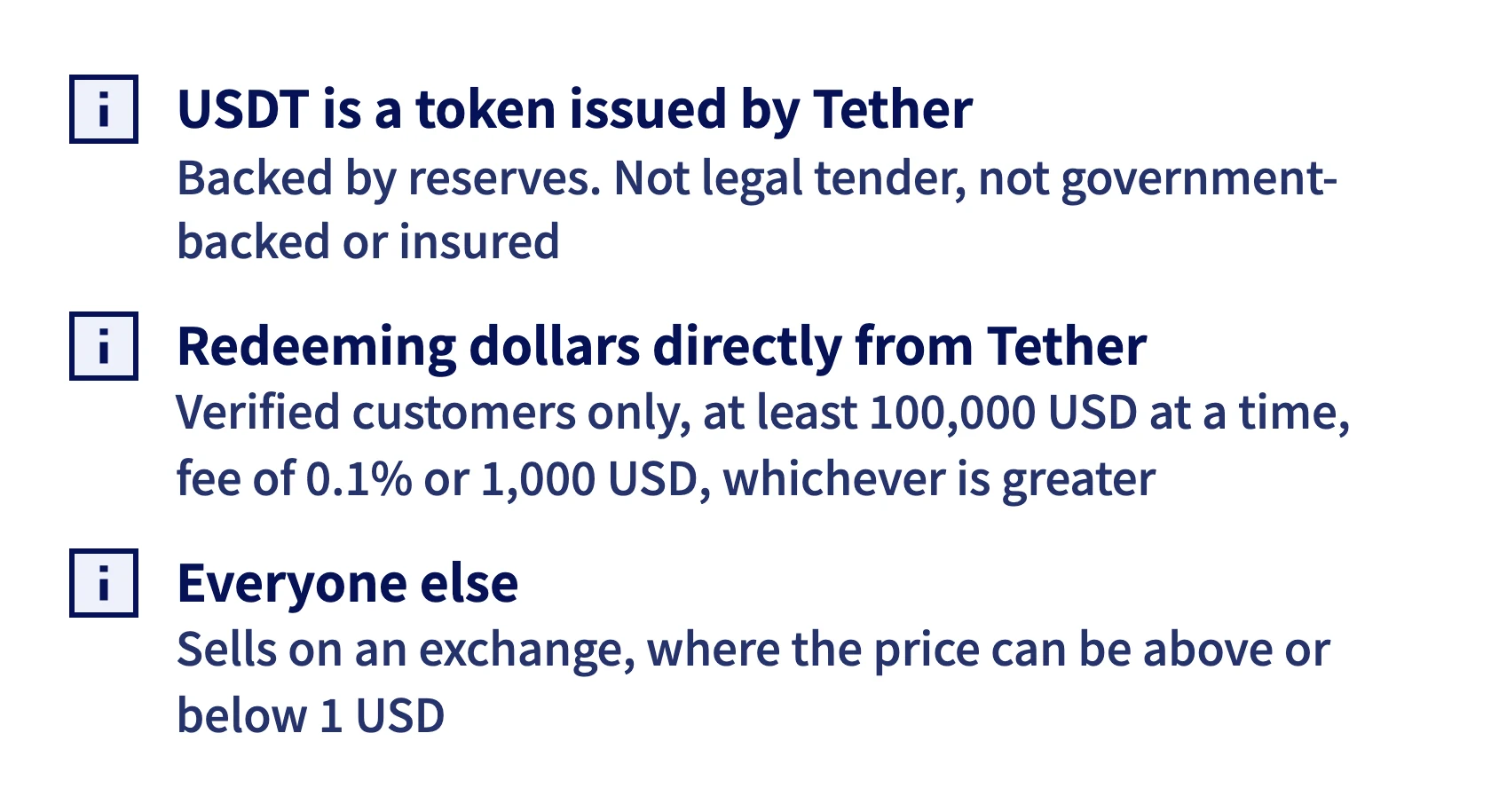
Lending USDT carries that extra layer of risk compared with USD.
Different money for different jobs
A time deposit pays less, but you know what you'll get at maturity and it's insured up to NT$3 million.
Lending rates are set by the market. At times they're well above posted deposit rates, at times close to zero. There's no deposit insurance, and you carry both exchange risk and borrower risk.
Keep the amount you lend within what you're comfortable holding on a single exchange. If you've never lent before, start with the Bitfinex lending guide.