Stablecoin Interest: Earn Products, Staking and Lending
Contents
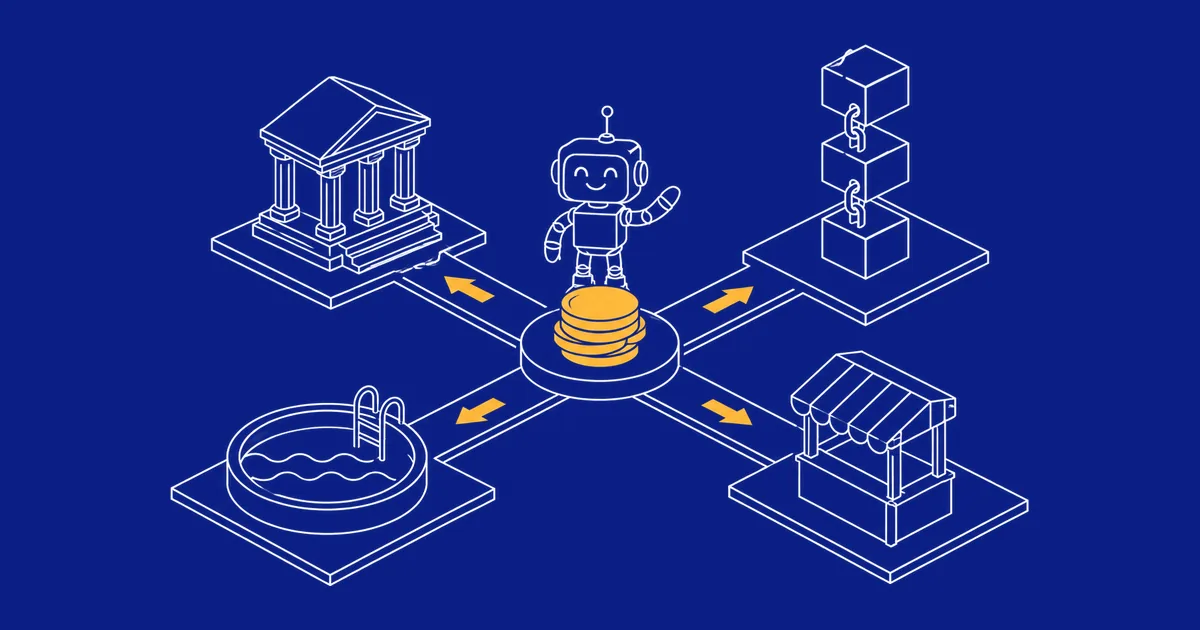
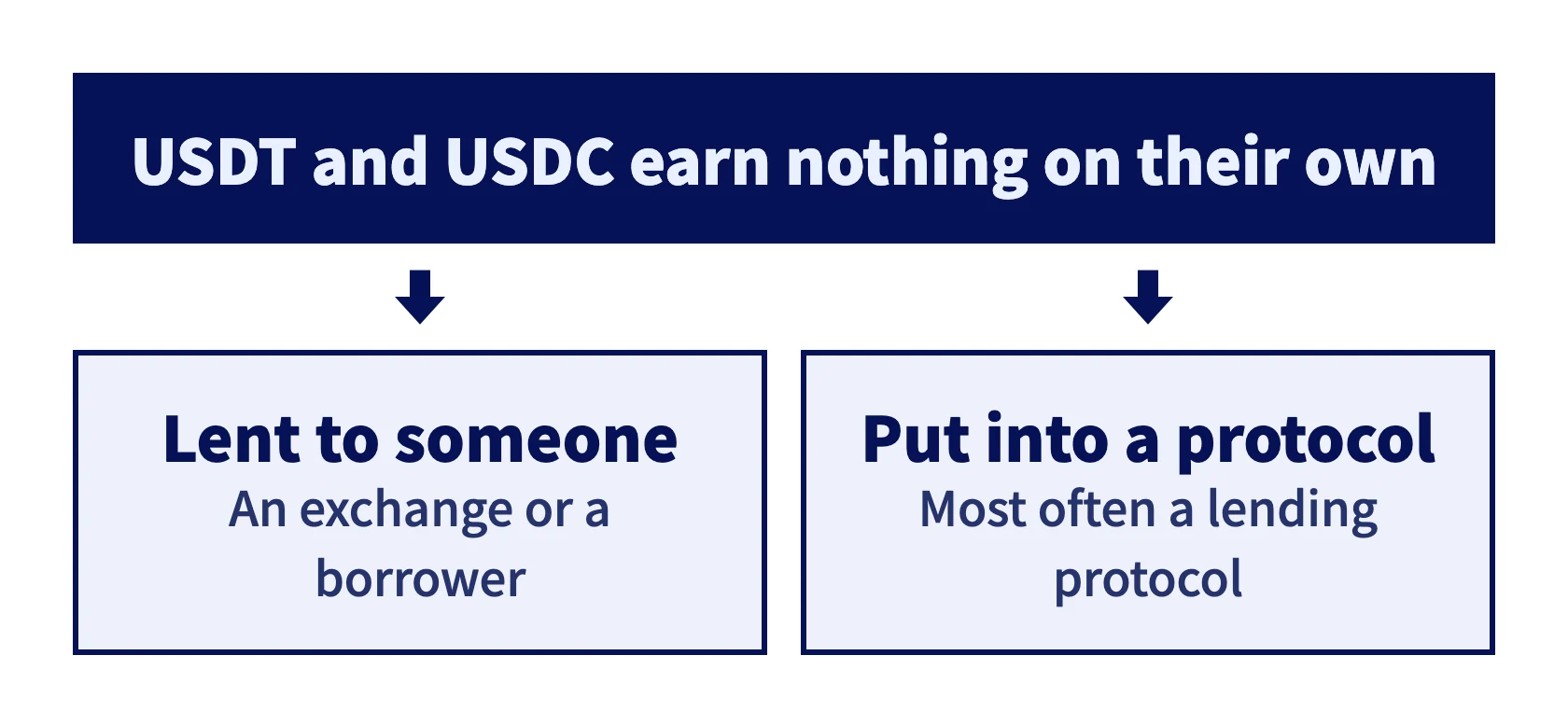
USDT and USDC don't earn anything sitting in a wallet. Any interest you see comes from handing your coins to someone else to use. What differs is who gets them, who sets the rate, and when you can have them back. This article covers four common ways to do it. It compares how they work and what can go wrong. Rates change, so it doesn't rank them by return.
Stablecoins pay no interest on their own
The GENIUS Act, signed into US law in July 2025, bars stablecoin issuers from paying holders interest or yield simply for holding the coin.
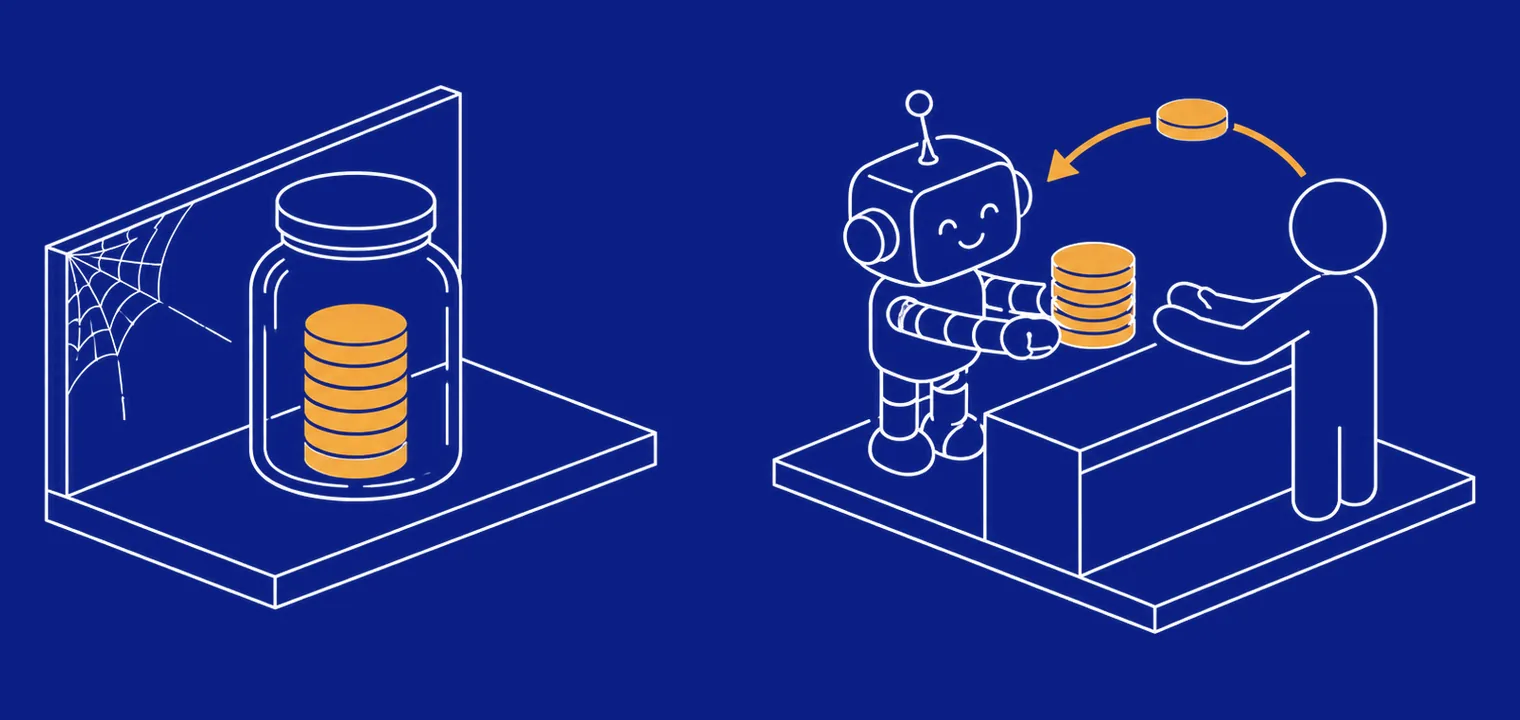
So whatever a platform calls its product, the interest has one of two sources: your coins were lent to someone, or they were put into an on-chain protocol.
Exchange earn products: lending to the exchange
Take Binance as an example. Under Binance Earn, Simple Earn comes in Flexible and Locked versions. Binance's own explanation is that subscribing to a Flexible product provides liquidity to Binance, which lends the assets to other users through its margin and loan products and passes the interest on to you as rewards.
The platform sets the rate and changes it.
The terms say the following.
- Your assets aren't held separately. They may be commingled with those of Binance and other clients.
- Rewards aren't guaranteed or fixed.
- In exceptional circumstances you may not get all of your assets back.
- Flexible products can be redeemed at any time, though redemption may be delayed in extreme markets or when many users redeem at once. Redeeming a Locked product early forfeits the rewards you've received.
The risk here sits with the exchange itself. In 2022, Celsius, Voyager and BlockFi, all platforms that took deposits and paid interest, filed for bankruptcy one after another, with customer funds stuck inside.
What "staking" a stablecoin really means
Staking originally means locking coins on a blockchain to act as a validator, with rewards for helping run the network. USDT and USDC are tokens issued on other chains. They have no validator mechanism of their own to stake in.
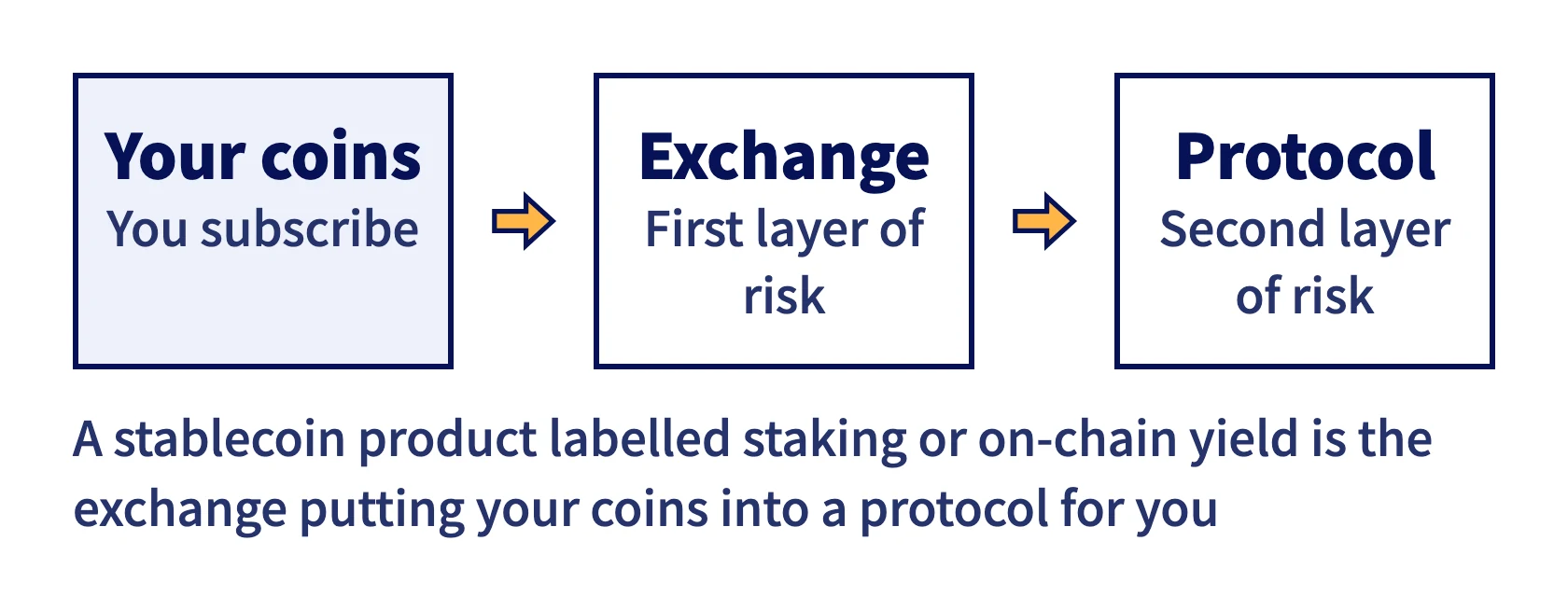
When an exchange offers a stablecoin product labelled staking or on-chain yield, it is putting your coins into an on-chain protocol on your behalf, most often a lending protocol.
Binance describes its On-chain Yields as a high-risk product whose returns depend on the protocol and aren't guaranteed, and says it isn't liable for losses caused by problems with the on-chain protocol. Redemption can take up to 72 hours.
That means you carry two layers of risk at once: the exchange and the protocol.
DeFi lending: putting coins into a protocol yourself
Protocols such as Aave and Compound let you deposit stablecoins directly, and the interest comes from borrowers. The protocol adjusts the rate automatically based on how much of the pool is in use. More borrowing means a higher rate.
You manage your own wallet and private keys. There are three main risks.
- A bug in the smart contract.
- Collateral falling so fast that it can't be liquidated in time, leaving bad debt.
- When most of the pool is lent out, you can only withdraw once borrowers repay or new deposits arrive.
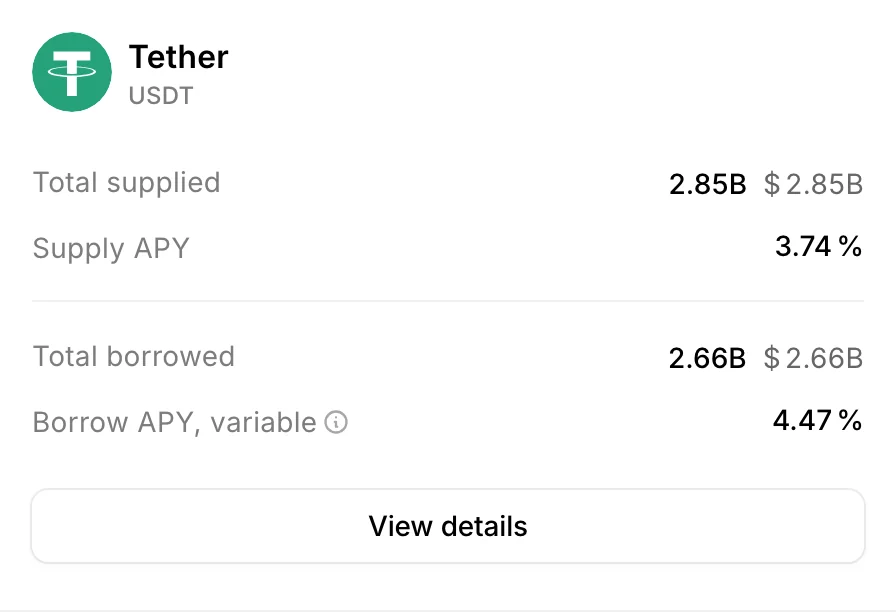 USDT on Aave's market page: amounts supplied and borrowed, and the supply and borrow APY, captured October 1, 2026 (app.aave.com)
An exchange funding market: placing your own offers
Bitfinex's funding market works differently. You place an offer with a rate and a period, and lend to traders who use margin on Bitfinex.
The rate is set by the offers and bids on the funding book. There is no posted rate. It's low when the market is quiet and spikes when it's busy, and nothing is guaranteed.
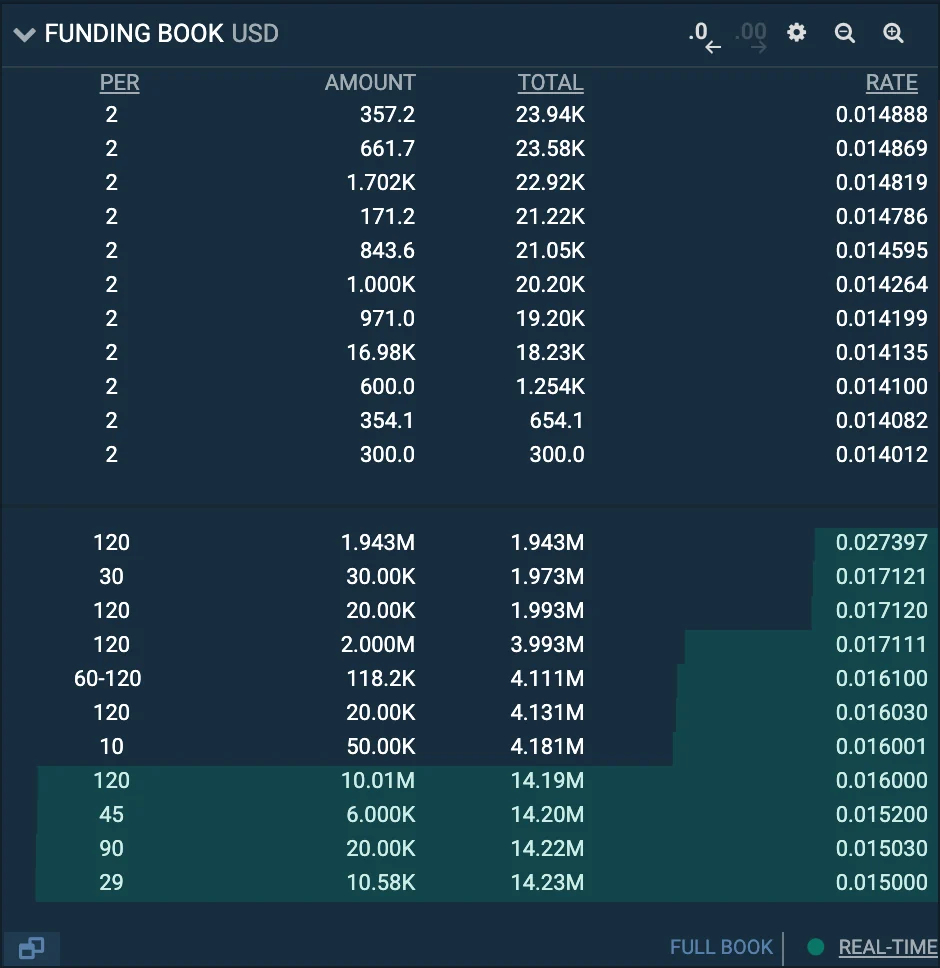 The USD funding book on Bitfinex, captured October 1, 2026. Lenders' offers are on top and borrowers' bids below
Once an offer fills, you can't call the loan back before it expires, though the borrower can repay early. Bitfinex takes 15% of the interest as a fee.
Bitfinex force-liquidates the borrower's position to repay the loan, and its terms also say it doesn't guarantee lenders against losses. Your money stays in your Bitfinex account the whole time, so exchange risk applies here too. The details are in Is Bitfinex lending safe?
How these rates compare with exchange flexible savings, and why, is covered in Why are Bitfinex lending rates higher?
Four questions to ask when you compare
- Who gets your coins: an exchange, a protocol, or borrowers on a market.
- Who sets the rate: the platform, a utilization formula, or the order book.
- When you can get them back: any time, at expiry, or when the pool has cash.
- What the terms say happens when something goes wrong.
| Who gets your coins | Who sets the rate | When you get them back | |
|---|---|---|---|
| Exchange earn | The exchange | The platform | Flexible at any time, locked at expiry |
| On-chain yield | A protocol, through the exchange | Depends on the protocol, not guaranteed | Redemption can take up to 72 hours |
| DeFi lending | A protocol | A utilization formula | When the pool has cash |
| Bitfinex funding | Borrowers on the market | The order book | At expiry or when the borrower repays |
The exchange earn and on-chain yield rows describe Binance's products.
EZLO automates the last of these. It places offers for you on Bitfinex's funding market, priced off the rates that are actually filling. If you've never lent before, start with the Bitfinex lending guide.