Is Bitfinex Safe and Legit? Hacks, Fines, Fake Sites
Contents
People who search "is Bitfinex legit" are usually asking one of two things: can the exchange itself be trusted, or is the "Bitfinex" someone sent them the real one. This article covers both.
Who runs Bitfinex
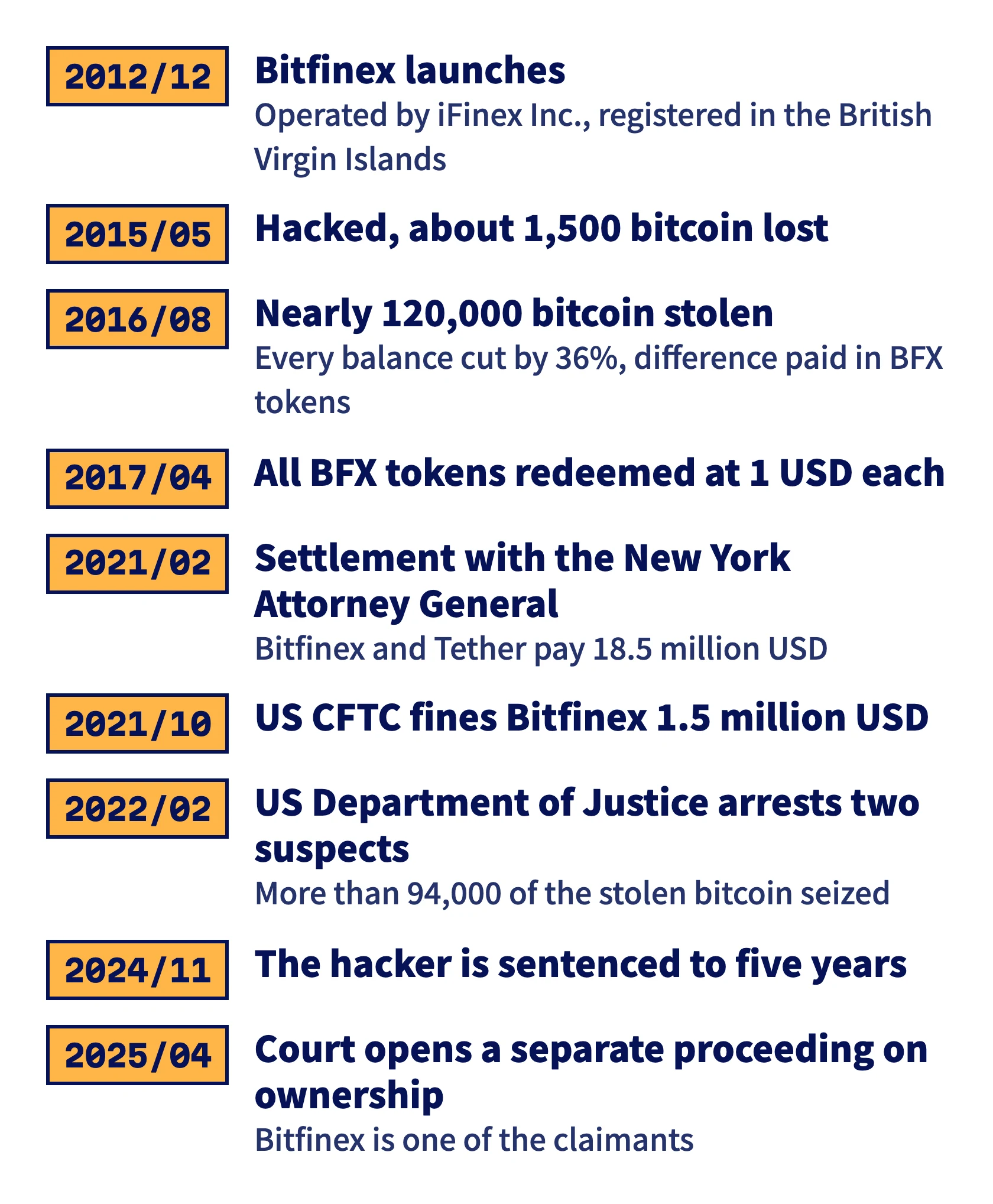
Bitfinex launched in December 2012. It's operated by iFinex Inc., a company registered in the British Virgin Islands, and has been running for more than a decade.
Tether, the issuer of USDT, is also owned by iFinex. The two companies share shareholders and management.
Bitfinex doesn't serve US residents.
What has gone wrong
In May 2015, Bitfinex was hacked and lost about 1,500 bitcoin.
August 2016 was far bigger: nearly 120,000 bitcoin were stolen. Afterwards, every customer balance was cut by 36%, including accounts that weren't breached, and the difference was paid out in BFX tokens. In April 2017, Bitfinex redeemed all BFX tokens at 1 USD each.
In February 2022, the US Department of Justice arrested two suspects and seized more than 94,000 of the stolen bitcoin. One of them admitted to being the original hacker and was sentenced to five years in prison in November 2024.
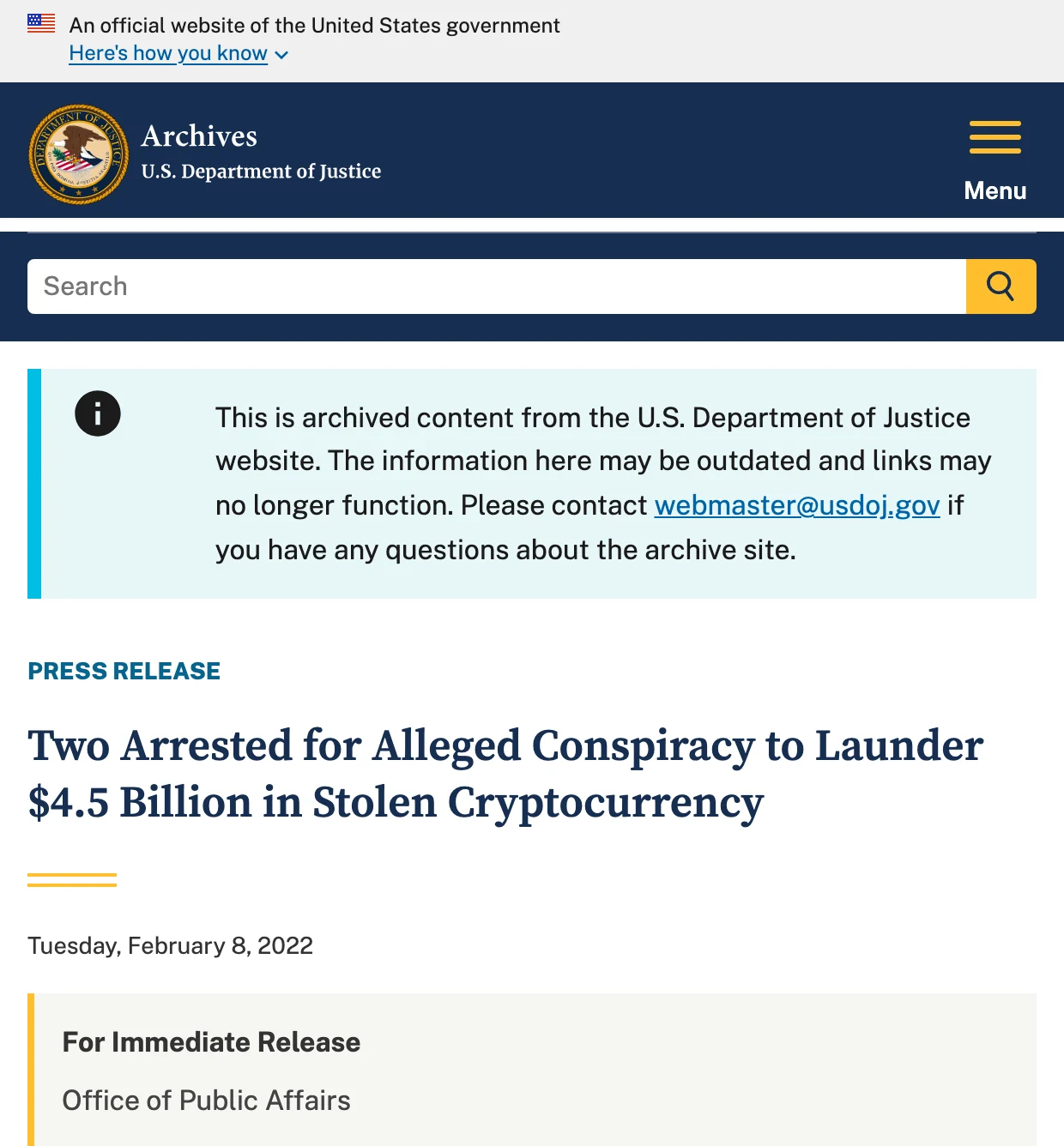 US Department of Justice press release, February 8, 2022 (justice.gov)
On the regulatory side, the New York Attorney General alleged that Bitfinex used Tether's reserves to cover an 850 million USD shortfall. Bitfinex and Tether settled for 18.5 million USD in February 2021 and agreed to keep New York customers off the platform. In October 2021, the US Commodity Futures Trading Commission fined Bitfinex 1.5 million USD for illegal off-exchange retail transactions with US customers.
Could Bitfinex go under?
Nobody can promise it won't. Here is what public information confirms.
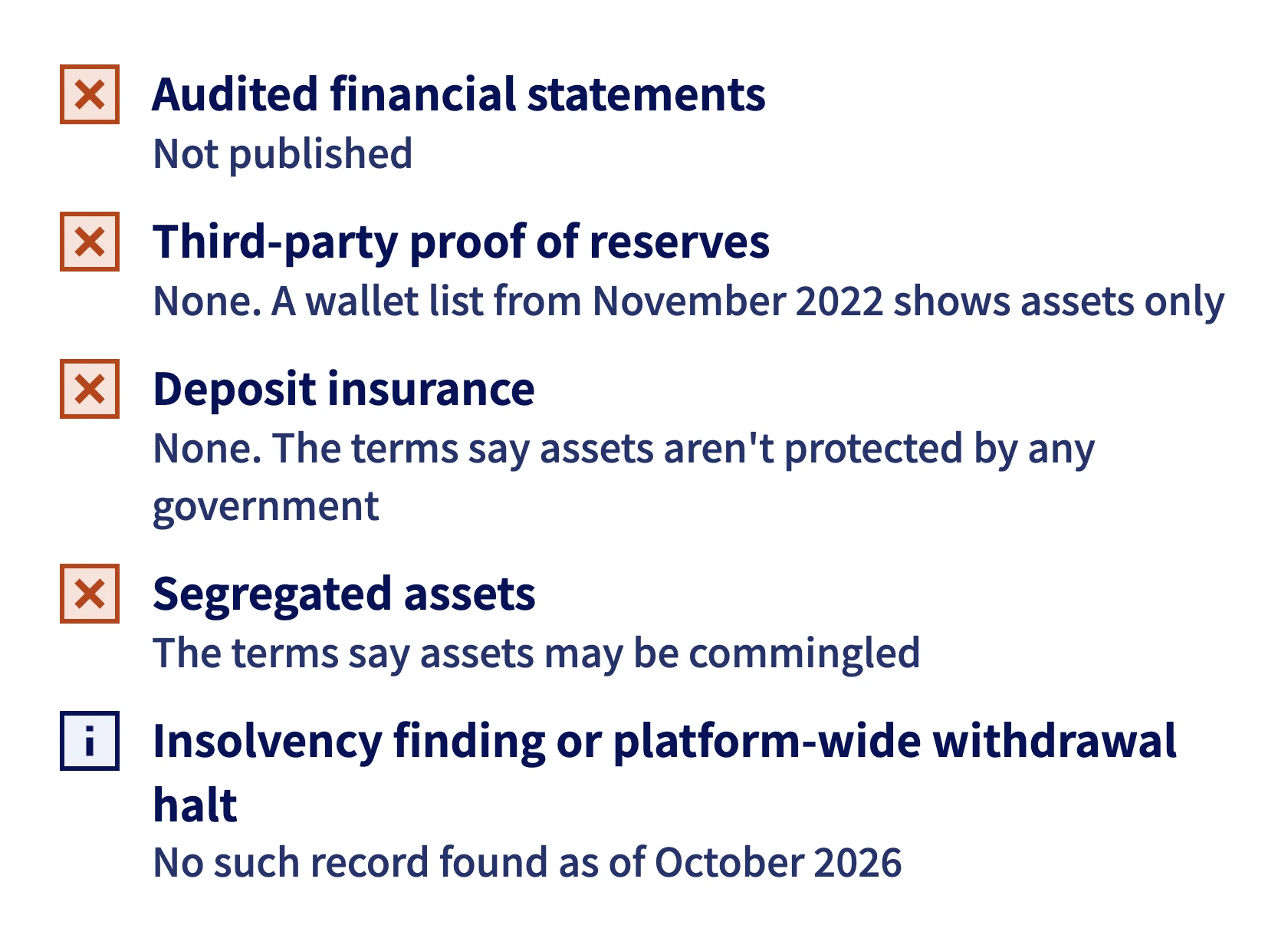
- Bitfinex doesn't publish audited financial statements or a third-party proof of reserves. In November 2022 it published a list of wallet addresses, which shows assets but not liabilities.
- There is no deposit insurance. The terms of service state that assets in your account aren't protected or insured by any government.
- The terms also say the assets in your account aren't held separately and may be commingled with those of other users and of Bitfinex itself. The risk disclosure lists total loss if Bitfinex becomes insolvent.
- As of October 2026, we found no record of a regulator or court finding Bitfinex insolvent, and no announcement of a platform-wide halt on withdrawals.
- The bitcoin seized by the US hasn't been returned to Bitfinex. In April 2025 the court decided ownership would be settled in a separate proceeding, and Bitfinex is one of the claimants.
So is it safe to use?
The stolen funds were eventually made good, the fines were paid, and the exchange is still operating. It's also true that it was hacked, that customers had to share the loss, and that the company is registered offshore, which limits your legal options if something goes wrong.
A practical approach is to treat it as a place with exchange risk: only keep an amount you're comfortable holding on a single exchange, and turn on two-factor authentication. Lending carries a few more risks of its own, covered in Is Bitfinex lending safe?
Scams that use the Bitfinex name
You're more likely to run into someone impersonating Bitfinex. There are three common patterns.
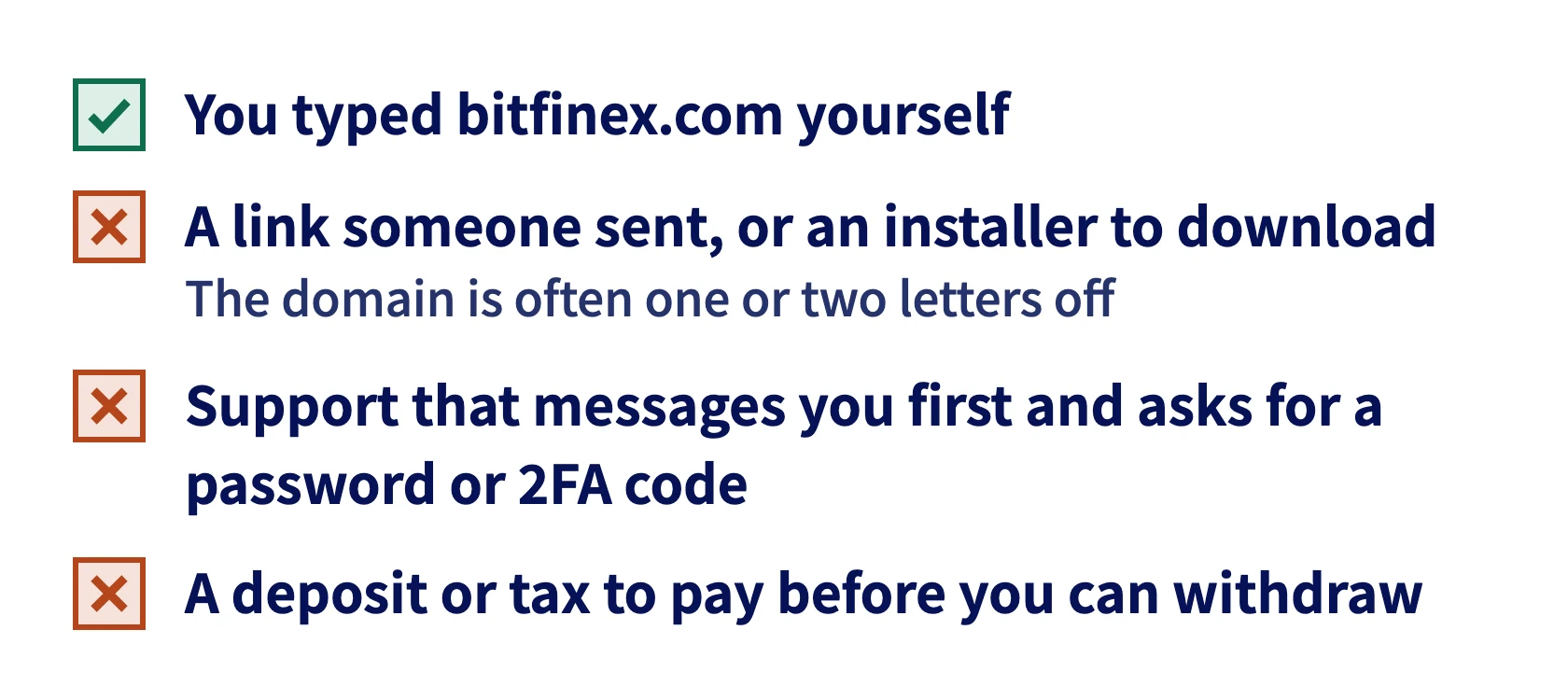
- Fake sites and fake apps: a domain one or two letters off from bitfinex.com, or a link that asks you to download an installer. Deposits go in and never come out.
- "Mentors" and investment groups: someone on Telegram or WhatsApp walks you through trading on a platform that calls itself Bitfinex. The balance keeps growing until you try to withdraw, and then you're told to pay a deposit or a tax first.
- Fake support: an unsolicited message says there's a problem with your account and asks for your password or 2FA code, or offers to manage your lending for you.
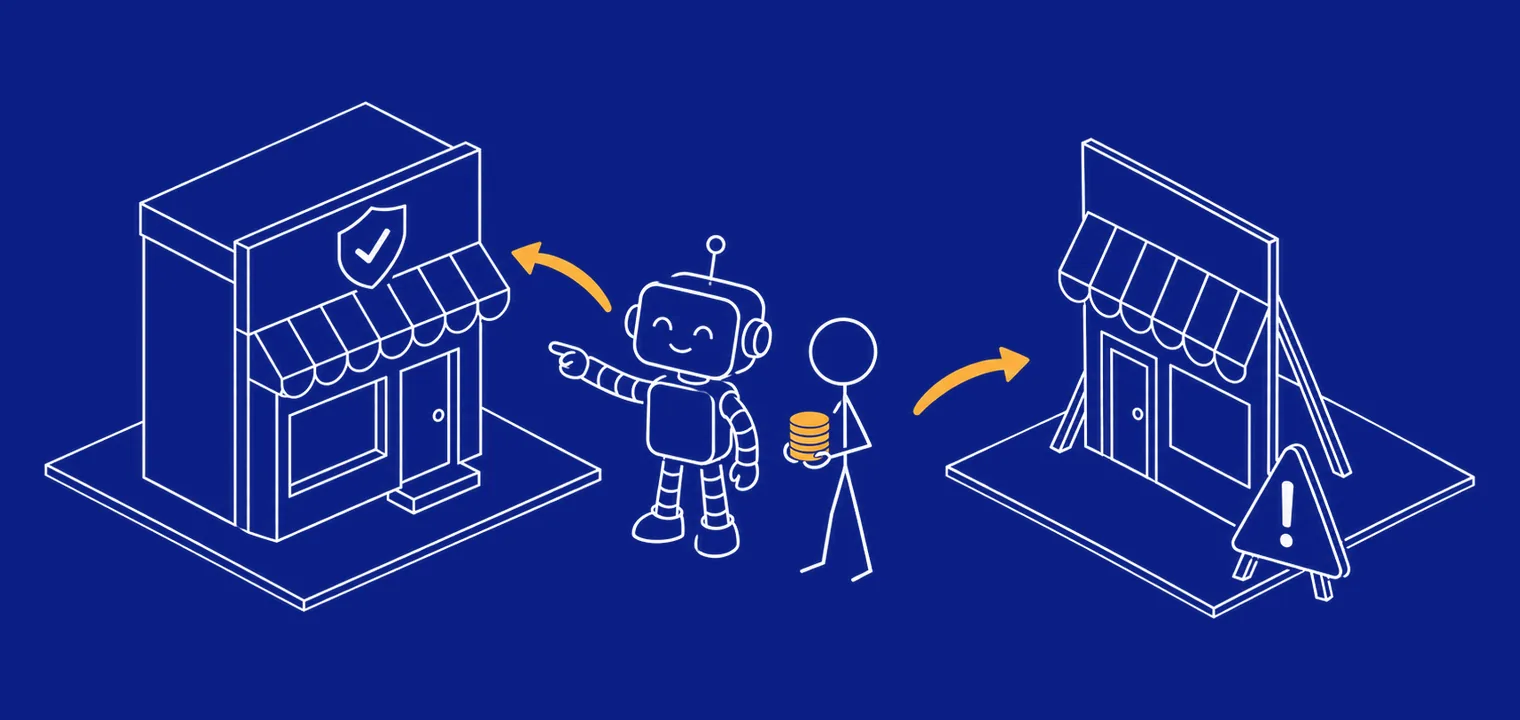
A few checks tell them apart.
- Only reach the site by typing bitfinex.com yourself. Don't follow links people send you.
- Exchange support won't message you first to ask for a password or a 2FA code.
- If you have to pay before you can withdraw, it's a scam.
- If you think you've been scammed, report it to your local authorities.
Can a lending bot steal your money?
A lending bot works through an API key on your account. If the key has only read and funding permissions and withdrawals are off, the tool can place offers and nothing else. It can't move money out. Skip any service that asks you to send funds to its own account or to enable withdrawals.
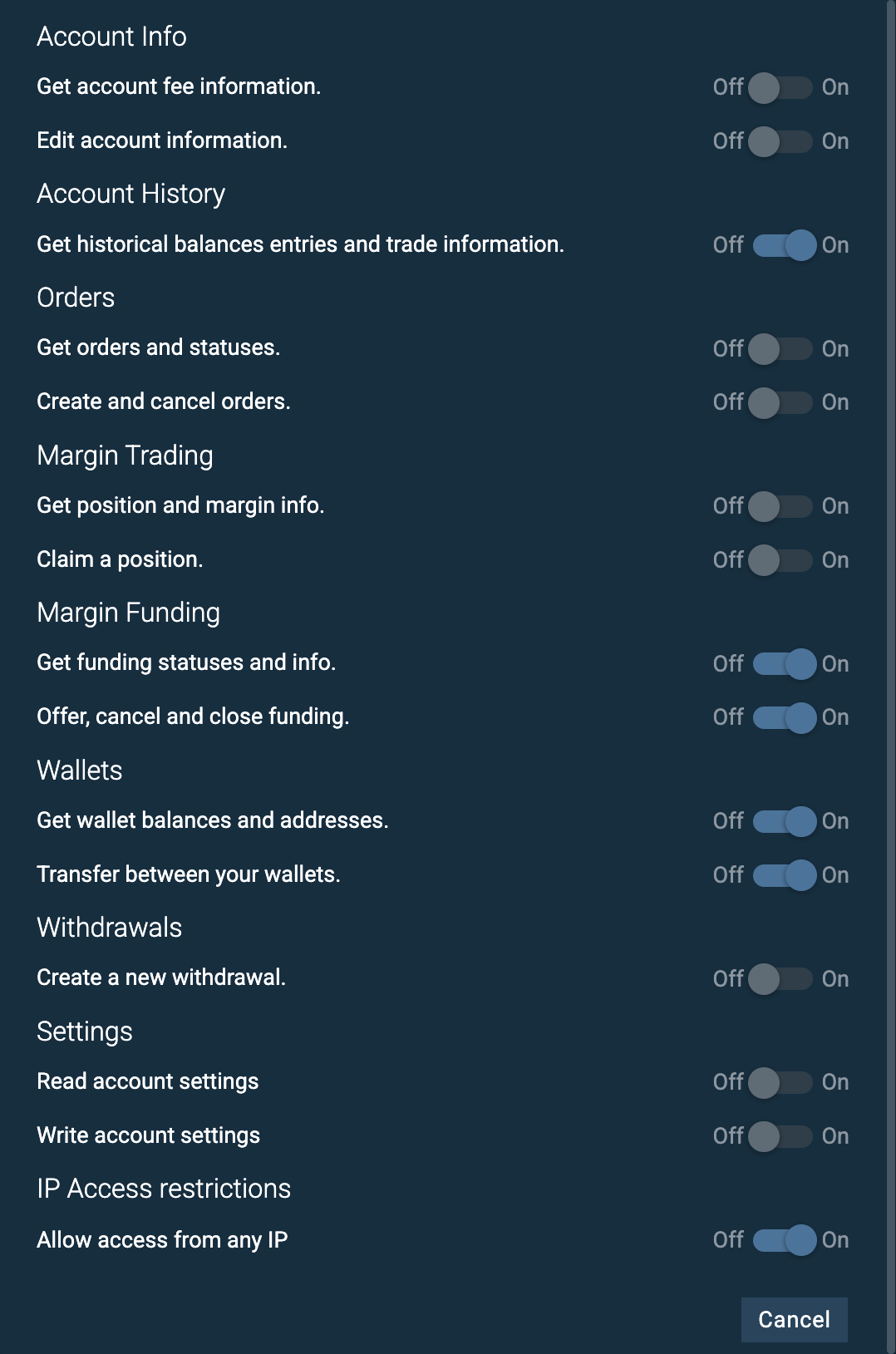 The permissions page when you create a Bitfinex API key. Lending uses Account History, Margin Funding and Wallets. Withdrawals stay off
For what to look for, see How to choose a Bitfinex lending bot. The exact permissions to enable are listed with screenshots in the help page.